
A ceiling stain may fit inside a dinner plate while the exterior defect sits beside a valley, wall, drain, or penetration. The real decision begins when the roofer opens that location: will the opening reveal an isolated repair, or will damaged flashing, wet insulation, and unsound decking push the boundary outward? Judge the repairability footprint, not the stain size or calendar age alone.
Can this damaged roof receive a durable localized repair?
A durable roof repair is practical when the defect is isolated, surrounding roofing remains serviceable, compatible materials can be integrated, and the deck is sound.
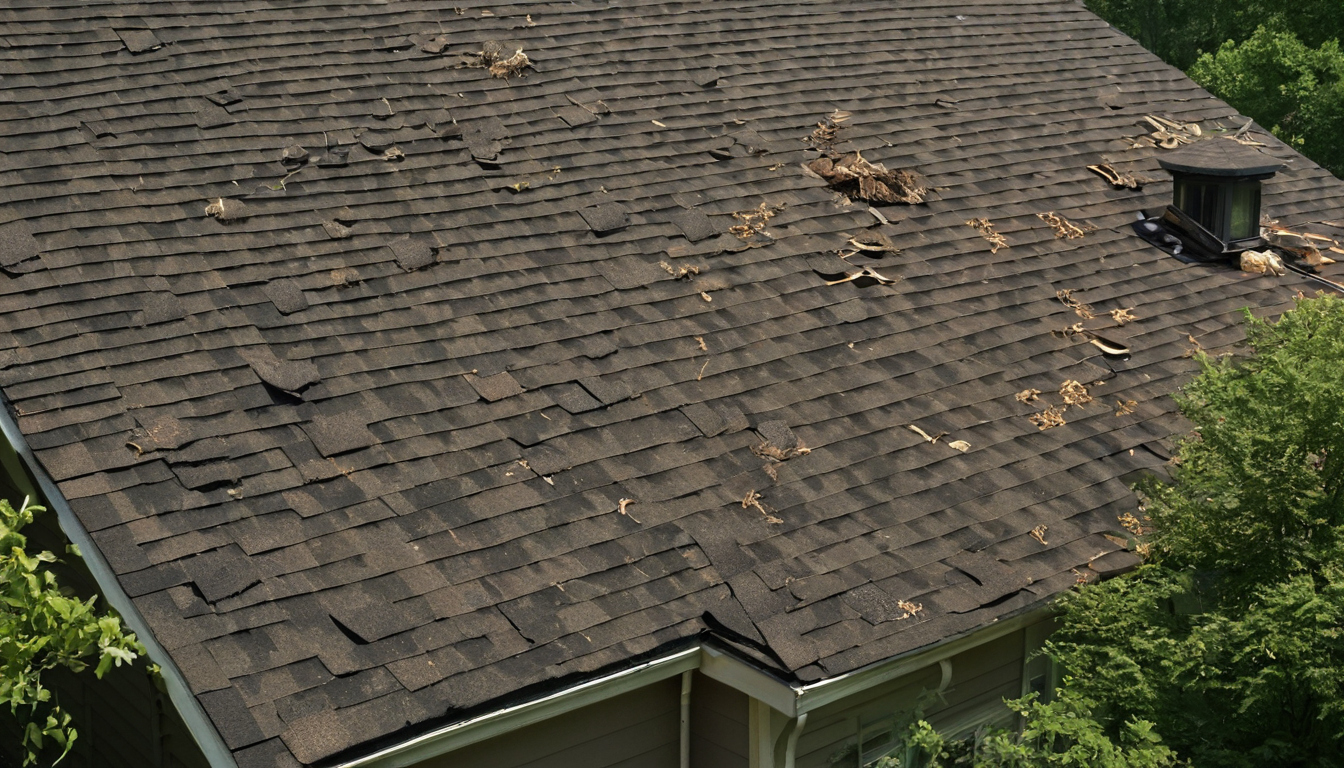
Can this damaged roof receive a durable localized repair shown with practical context cues.
| Decision state | Conditions to verify |
|---|---|
| Repair-favorable | One documented failure involving replaceable shingles, accessible individual tiles, a separable metal component, or a membrane defect surrounded by sound, weldable material. |
| Investigate further | Uncertain leak path, concealed deck condition, brittle or bonded materials, discontinued profiles, or difficult access. |
| Replacement-favorable | Recurring leaks, widespread deterioration, multiple entry paths, or the need to disturb a large roof field to rebuild one detail. |
A small visible defect does not always mean a small roof repair
Localized damage means different things on different systems. Shingles must separate without breaking adjacent courses; tile must permit removal without damaging interlocked units; metal components must detach without compromising long seams or concealed clips; membrane material around a defect must remain suitable for an adhered or welded tie-in. Emergency water control stops active entry, temporary patching buys time, and permanent repair restores the complete roofing detail.
Safe access also affects the opening plan. For covered construction work, OSHA requires fall protection at an unprotected edge 6 feet or more above a lower level.
Repeated leakage indicates that the failure boundary may be wider than the last patch
Repair records should map dates, weather, and locations. Repeated patches can conceal drainage, flashing, ventilation, or substrate defects, making the water-entry path the next issue to resolve.
Roof damage location often matters more than the size of the ceiling stain
A ceiling stain does not reliably identify the exterior entry point. Water can travel along underlayment, fasteners, insulation, and framing, so roofers must trace the path before defining the repair boundary.
Which roof locations are difficult to repair without rebuilding adjacent details?
- Valleys and material transitions: Shingles, tile, or metal panels may require broad removal to expose underlayment, valley metal, clips, or membrane tie-ins and restore the drainage sequence.
- Sidewalls, headwalls, chimneys, and skylights: Step flashing, apron flashing, counterflashing, and diverters must overlap correctly. Surface sealant cannot replace failed concealed flashing.
- Vents, curbs, parapets, scuppers, and drains: Cracked boots, loose terminations, blocked drainage, or failed membrane corners can spread moisture beneath low-slope roofing.
- Eaves and roof edges: Wind-driven rain or ice accumulation, where those exposures occur, can force water beneath coverings and wet decking beyond the apparent leak.
How should roofers confirm the water-entry path before opening the roof?
- Match leak timing to wind direction, rainfall intensity, snow or ice conditions, and drain overflow.
- Map the interior stain and inspect the attic or roof underside for wet fasteners, dark decking, condensation, plumbing leakage, or mechanical moisture.
- Review field materials, flashing, penetrations, drainage points, and terminations. Connect interior, underside, and exterior findings with labeled photographs or a diagram.
- Use moisture meters or infrared imaging as screening tools, not final proof. Confirm uncertain boundaries with probes or core cuts appropriate to the assembly.
- Conduct controlled water testing only when drainage, electrical safety, interior protection, and test isolation permit meaningful results.
Field failures, flashing failures, drainage problems, penetrations, and condensation require different corrections. Persistent dampness requires correction of the leak or condensation source, not cosmetic mold cleaning alone, according to the U.S. Environmental Protection Agency. Structural movement, widespread moisture, electrical exposure, or conflicting results warrant an appropriate specialist. Once the path is known, roof age determines whether surrounding materials can survive the opening.
Roof age changes repairability, but age alone does not require replacement
Roof age is a material-handling and compatibility issue, not automatic proof that replacement is necessary. The practical test is whether surrounding roofing can tolerate disassembly and accept a reliable tie-in.
Observable aging differs by system. Asphalt shingles may curl, crack, lose granules, expose mat, or release at seal strips. Tile may fracture or spall. Metal may corrode, loosen at seams, or lose coating. Modified bitumen and built-up roofing may split, blister, or lose surfacing, while single-ply membranes may shrink, crack, or weaken at seams. Sun, heat, freeze-thaw cycles, salt air, hail, foot traffic, and poor ventilation can accelerate deterioration.
Can an older asphalt-shingle roof be repaired without damaging nearby shingles?
An older shingle roof remains repairable when adjacent shingles can be lifted without cracking, tearing, delaminating, or shedding excessive granules. Roofers should photograph seal-strip bonding, fastening access, exposed mat, widespread curling, and replacement-product availability. Manipulation and resealing must follow the identified manufacturer’s instructions and suitable weather conditions. A cold, brittle, or heavily bonded field can turn one shingle replacement into several damaged courses.
Compatible replacement roofing must match more than color
Compatibility includes shingle dimensions, tile profile, metal type and coating, membrane chemistry and thickness, attachment method, fasteners, primers, adhesives, and sealants. The roofing contractor should document discontinued products, acceptable repair alternatives, and manufacturer restrictions on tying new components into aged materials. A warranty term applies only to its stated product and conditions; it does not prove remaining service life. Surface repairability still depends on the deck and materials below.
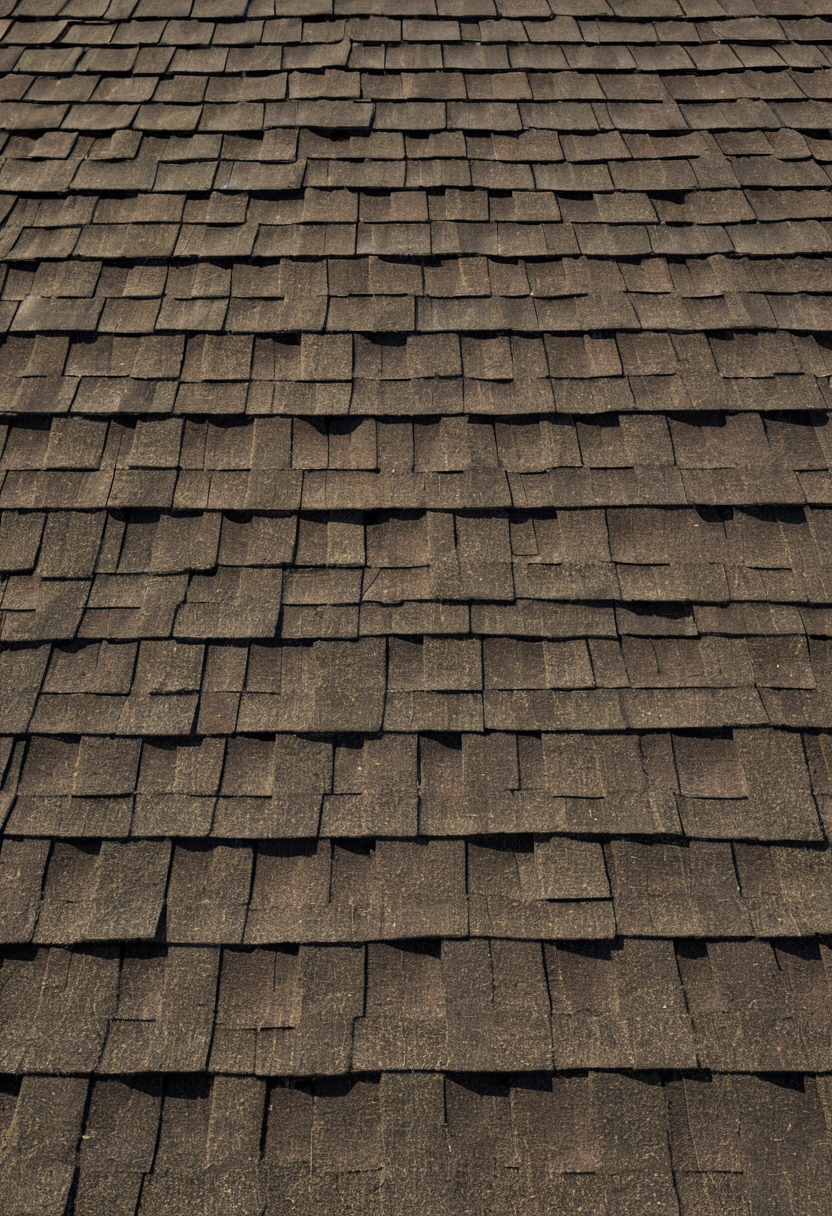
Roof age changes repairability, but age alone does not require replacement shown as an editorial planning reference.
Deck condition and trapped moisture can expand a roof repair into replacement
A localized opening can expose wet insulation, delaminated sheathing, corroded metal decking, or decayed framing. Repair remains practical when the contractor can define and safely remove the unsound area. Widespread moisture, inaccessible deterioration, or lost structural capacity favors a broader replacement boundary.
The investigation should progress through non-destructive review, selective openings, substrate assessment, and written scope adjustment. Interior staining, underside discoloration, deflection, fastener corrosion, and moisture readings guide test locations. A dry roof surface does not prove that insulation, cover boards, or lower layers are dry.
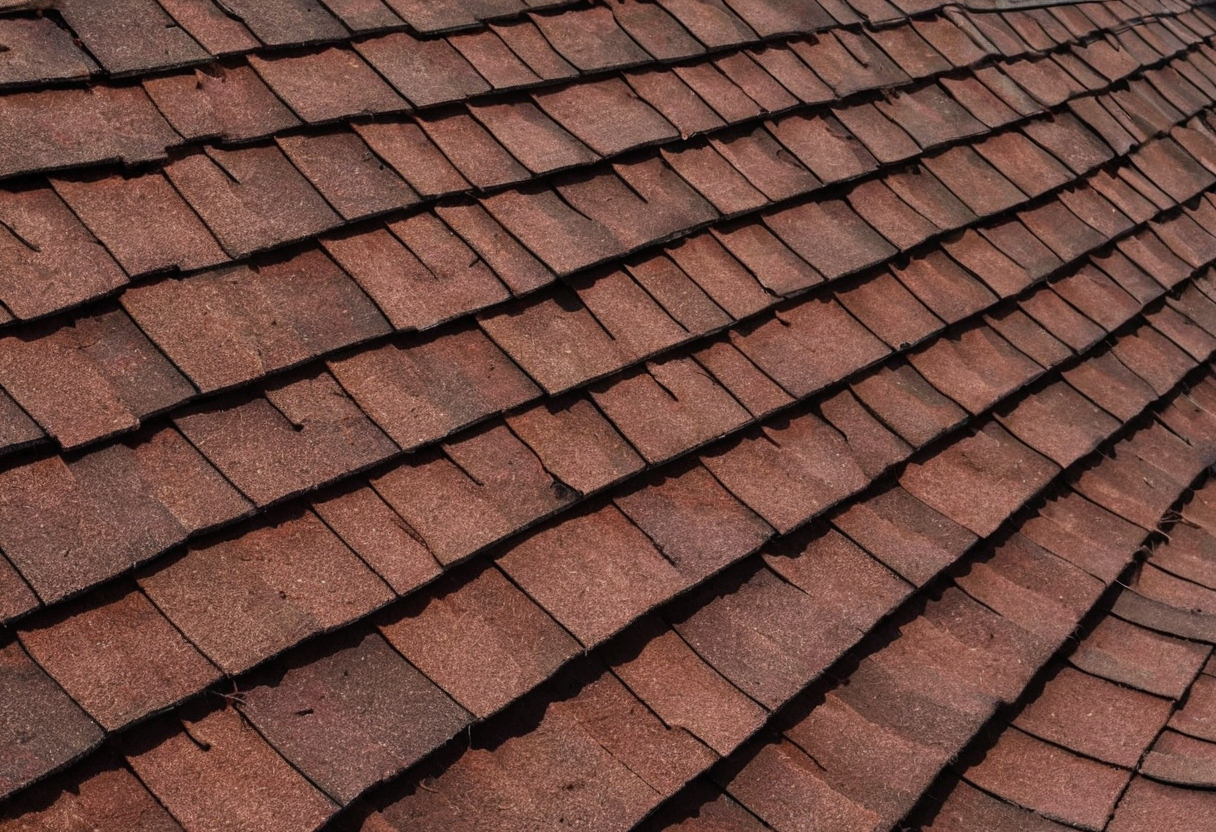
Deck condition and trapped moisture can expand a roof repair into replacement shown as an editorial planning reference.
What evidence shows that roof decking is sound enough to remain?
Deck acceptance depends on the roof system, structural design, locally adopted code, and attachment requirements. Wood planks, plywood, and oriented strand board need sound fibers, suitable thickness, proper spacing, and reliable fastener holding. Concrete, gypsum, lightweight insulating concrete, and metal decks require system-specific checks for cracking, erosion, corrosion, attachment, and surface suitability.
A defensible report identifies probe and core locations, photographs retained and removed areas, records moisture findings, and documents engineering conclusions where needed. Sagging, extensive decay, damaged trusses or rafters, corroded steel, or questionable fastener capacity requires structural review. For mechanically attached systems, representative withdrawal testing may be appropriate; ANSI/SPRI FX-1 addresses field testing of roofing-fastener withdrawal resistance.
Wet insulation can make the concealed repair area larger than the visible leak
Moisture can migrate laterally through insulation joints, layered assemblies, and drainage paths. Infrared surveys, moisture meters, probes, and test cuts can help map the spread, but ballast, recent rain, surface moisture, insulation type, roof construction, and instrument settings can affect results. Selective openings may still be necessary.
Retention, drying, or removal must follow applicable roof-system requirements and professional findings. The EPA notes that porous materials that remain moldy or cannot be cleaned and dried may require disposal. The contract should price deck, insulation, and cover-board replacement by agreed units and require photographs before change-order approval. Only then can repair and replacement receive a full-scope comparison.
Compare roof repair and replacement by full scope, service life, and repeat-risk
Roof repair usually costs less initially, but a valid comparison includes investigation, access, mobilization, material matching, flashing, concealed-condition allowances, permits, and repeat-failure risk.
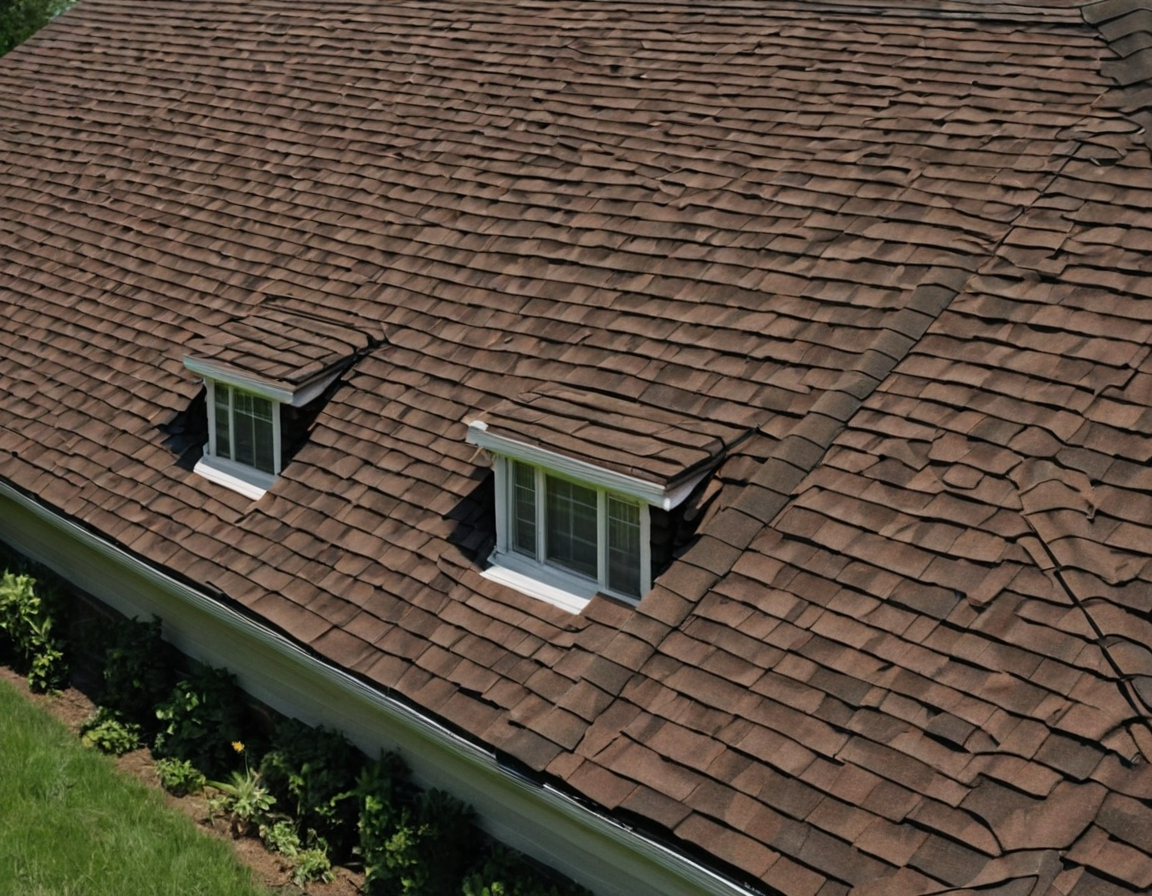
Compare roof repair and replacement by full scope, service life, and repeat-risk shown with practical context cues.
| Scope | Best fit | Primary risk |
|---|---|---|
| Localized repair | Isolated defect, sound deck, compatible materials | Missed leak paths |
| Partial replacement | Complete slope or drainage zone can be rebuilt | Weak tie-ins |
| Complete replacement | Widespread aging, moisture, or detail failures | Higher initial cost |
Which roof repair costs are commonly excluded from an initial estimate?
Require separate amounts or allowances for diagnostic visits, mobilization, access equipment, interior protection, demolition, flashing reconstruction, deck replacement, wet-insulation removal, disposal, permits, taxes, code upgrades, tarping, drying, and return trips. The contract should identify who photographs and authorizes concealed work. If adhesives or coatings affect occupied rooms, follow EPA guidance on ventilation during product use.
Partial roof replacement works only when the tie-in creates a complete drainage path
A coherent partial replacement follows ridges, valleys, transitions, or low-slope drainage boundaries rather than an arbitrary rectangle. Require a roof plan, compatible tie-in details, and confirmation of local rules for underlayment, ventilation, insulation, deck fastening, and existing layers. Avoid universal cost-percentage cutoffs. The proposed boundary must now be proven in writing.
Require the roofing contractor to prove the proposed roof repair or replacement scope
A roofing contractor should connect the recommendation to documented defects, test results, repair details, and local requirements, not merely roof age or a ceiling stain.
What should a written roof repair scope allow the client to verify?
| Scope item | Required proof |
|---|---|
| Diagnosis and boundary | Roof system, failure mechanism, repair dimensions or an after-opening measurement method, and inspection hold points. |
| Installation | Compatible materials, attachment method, underlayment, flashing sequence, ventilation work, tie-in, and finish requirements. |
| Concealed conditions | Photographs before covering, unit rates, exclusions, and stop-work authorization limits. |
For a mechanically attached system with uncertain substrate capacity, the scope may require field testing under ANSI/SPRI FX-1. Assign responsibility for testing, engineering, temporary weather protection, interior damage, and drying. The EPA advises drying damp materials within 24 to 48 hours where safe and practical.
How should homeowners evaluate roof repair near me results?
Verify licensing where required, liability insurance, workers’ compensation, permit history, manufacturer credentials, and experience with the installed system. Ask each roofer to explain the leak path, opening plan, tie-in detail, and evidence that would change repair to replacement. Confirm permit and inspection rules with the local authority. For broader bid checks, compare local roofing companies and their contract terms. Authorize work only when the documented repairability footprint supports the scope.
Frequently asked questions
How much roof damage requires replacement instead of a localized repair?
No universal area threshold applies to every roof. Replacement becomes more practical when moisture or deterioration extends beyond a definable repair boundary, compatible tie-ins are not possible, or accessing the defect would damage a substantial amount of serviceable roofing.
Is it better to repair a leaking roof or replace the entire roof?
Repair is usually preferable for an isolated, verified defect over a sound deck. Replacement is more defensible when multiple leak paths, widespread aging, wet insulation, failed flashing systems, or extensive substrate damage would remain after repair.